National and international collaborators
5 profiles
Professor
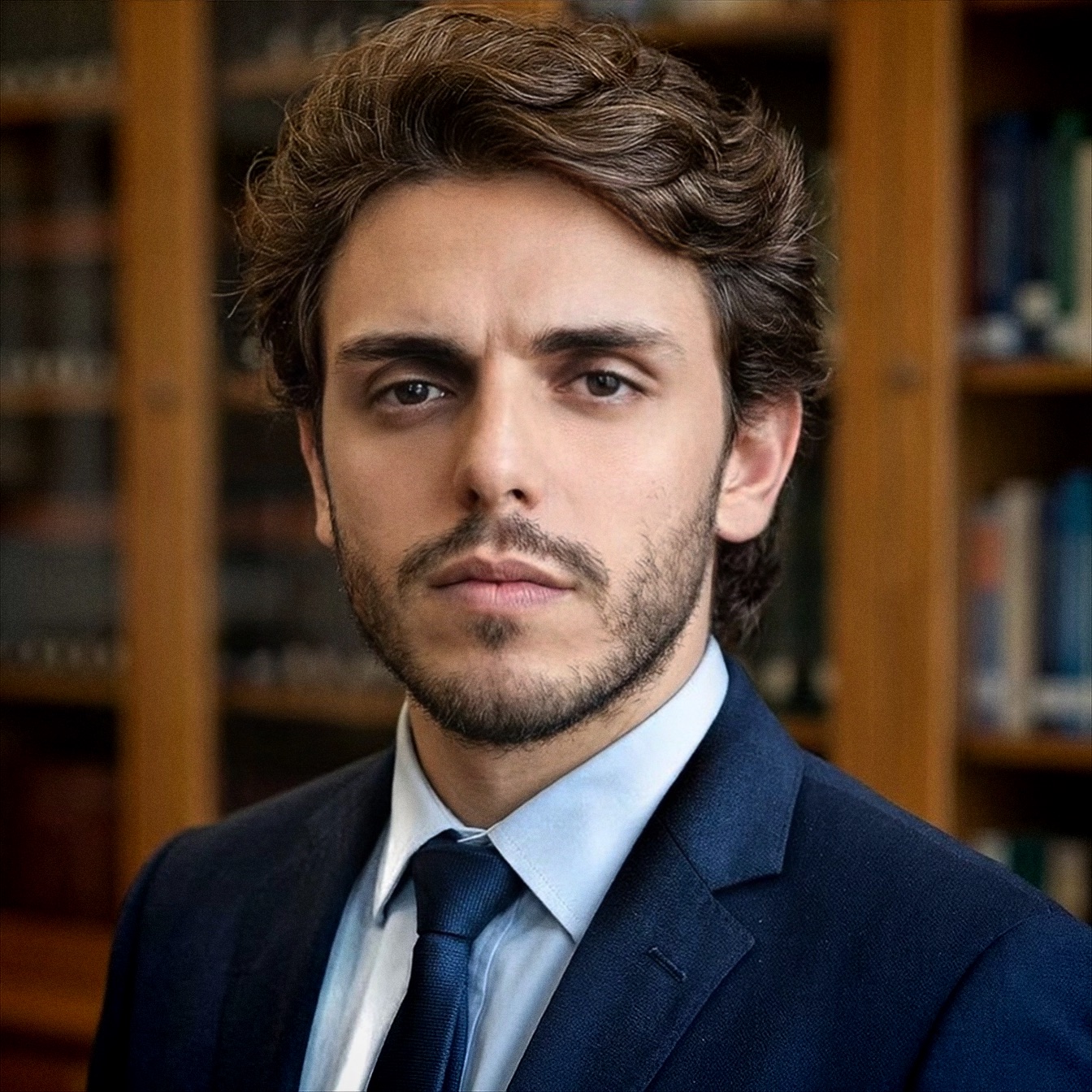
François Osiurak
Lumière University Lyon 2 · EMC Laboratory
Full Professor at Lumière University Lyon 2 and distinguished member of the Institut Universitaire de France. François Osiurak is a leading researcher in cognitive science and the evolution of human technology, with particular expertise in human tool use and cumulative technological culture. He heads the Cognition, Tools, Systems team at the EMC Laboratory and is included in Stanford University’s list of the world’s top 2% scientists.

Associate professor
Italo Testa
University of Naples Federico II
Associate Professor in Physics Education at the University of Naples Federico II. His research focuses on physics education, inquiry-based laboratory learning, and the cognitive and motivational processes underlying students’ understanding of physics. He is actively involved in teacher training, the national Piano Lauree Scientifiche (PLS-Fisica), and international research on innovative approaches to science education.

Associate professor
Mathieu Lesourd
University of Franche-Comté · INSERM UMR 1322 LINC
Associate Professor at the University of Franche-Comté in Besançon, France, and affiliated with INSERM UMR 1322 LINC. His research focuses on the cognitive and neurocognitive mechanisms underlying memory, problem-solving, and human tool use, with particular emphasis on both its mechanical and neuropsychological dimensions. His work primarily involves neuropsychological patients and individuals with neurodegenerative disorders.

Associate professor
Onofrio Gilgliotta
University of Naples Federico II
Associate Professor of General Psychology at the University of Naples Federico II and a member of the Natural and Artificial Cognition Lab (NAC Lab). His research focuses on evolutionary and neurorobotics, computational modelling of cognitive processes, human–computer interaction, and smart technologies. He has participated in several national and European research projects as Principal Investigator for the University of Naples Federico II and has developed educational and scientific tools for cognitive modelling and autonomous robotics.
Professor
Paola Marangolo
University of Naples Federico II
Full Professor of Neuropsychology and Cognitive Neuroscience at the University of Naples Federico II. Her research focuses on cognitive neurorehabilitation and the neural mechanisms of language recovery after acquired brain injury. She is actively involved in major European initiatives on aphasia and stroke rehabilitation, including programmes of the European Federation of NeuroRehabilitation Societies, the European Stroke Organisation, and the Stroke Action Plan for Europe 2024–2030.
Teaching assistants
1 profile
Teaching assistant
Daniela Rigatti
Suor Orsola Benincasa University
Daniela Rigatti holds a Master’s Degree in Psychology, with a focus on Cognitive Neuroscience from Suor Orsola Benincasa University, Naples, Italy. She also holds a postgraduate Master in Perinatal Psychology and Physiology. Her academic background and research interests span cognitive neuroscience, cognitive ergonomics, and applied psychology.
PhD students
1 profile
PhD student
Luigi Valio
Suor Orsola Benincasa University
PhD candidate in the National Doctoral Programme “Humanities and Technologies: An Integrated Research Path”, Curriculum in Psychology and Cognitive Ergonomics, at Suor Orsola Benincasa University. His doctoral research investigates how humans perceive, conceptualise, and reason about tools, integrating visual cognition, semantic knowledge, and technical reasoning within a cognitive neuroscience framework.
Master students
11 profilesMaster student
Arduino Moltedo
Suor Orsola Benincasa University
Master’s thesis student in Psychology (Cognitive Neuroscience) at Suor Orsola Benincasa University. His thesis is allocated to Family Gaze 1.0. The project uses eye-tracking to investigate social-attention patterns and potential endophenotypes in first-degree relatives of autistic individuals.
Master student
Ariadna Martina Pisani
Suor Orsola Benincasa University
Master’s thesis student in Psychology (Cognitive Neuroscience) at Suor Orsola Benincasa University. Her thesis is allocated to JOINT 1.0. The project uses eye-tracking and mental chronometry within the JOINT paradigm to study how observation and interaction shape the neurocognitive processing of actions.
Master student
Federica Bottino
Suor Orsola Benincasa University
Master’s thesis student in Psychology (Cognitive Neuroscience) at Suor Orsola Benincasa University. Her thesis is allocated to Neuropsicologia.app 1.0. The project focuses on the development and validation of Neuropsicologia.app, a digital platform designed to support neuropsychological assessment in clinical and research settings.
Master student
Gianluca Carannante
Suor Orsola Benincasa University
Master’s thesis student in Psychology (Cognitive Neuroscience) at Suor Orsola Benincasa University. His thesis is allocated to Neuropsicologia.app 1.0. The project focuses on the development and validation of Neuropsicologia.app, a digital platform designed to support neuropsychological assessment in clinical and research settings.
Master student
Gioia Menichini
Suor Orsola Benincasa University
Master’s thesis student in Psychology (Cognitive Neuroscience) at Suor Orsola Benincasa University. Her thesis is allocated to Pulley Task 1.0. The project uses an open-ended construction paradigm to examine mechanical reasoning, stability judgements and the transmission of technical solutions, integrating behavioural and eye-tracking measures.
Master student
Giulia Guadagno
Suor Orsola Benincasa University
Master’s thesis student in Psychology (Cognitive Neuroscience) at Suor Orsola Benincasa University. Her thesis is allocated to Family Gaze 1.0. The project uses eye-tracking to investigate social-attention patterns and potential endophenotypes in first-degree relatives of autistic individuals.
Master student
Giuseppina Ciotta
Suor Orsola Benincasa University
Master’s thesis student in Psychology (Cognitive Neuroscience) at Suor Orsola Benincasa University. Her thesis is allocated to Neuropsicologia.app 1.0. The project focuses on the development and validation of Neuropsicologia.app, a digital platform designed to support neuropsychological assessment in clinical and research settings.
Master student
Pietro Napolitano
Suor Orsola Benincasa University
Master’s thesis student in Psychology (Cognitive Neuroscience) at Suor Orsola Benincasa University. His thesis is allocated to Pulley Task 1.0. The project uses an open-ended construction paradigm to examine mechanical reasoning, stability judgements and the transmission of technical solutions, integrating behavioural and eye-tracking measures.
Master student
Simone Salvi
Suor Orsola Benincasa University
Master’s thesis student in Psychology (Cognitive Neuroscience) at Suor Orsola Benincasa University. His thesis is allocated to Pulley Task 1.0. The project uses an open-ended construction paradigm to examine mechanical reasoning, stability judgements and the transmission of technical solutions, integrating behavioural and eye-tracking measures.
Master student
Vincenzo Paciolla
Suor Orsola Benincasa University
Master’s thesis student in Psychology (Cognitive Neuroscience) at Suor Orsola Benincasa University. His thesis is allocated to Pulley Task 1.0. The project uses an open-ended construction paradigm to examine mechanical reasoning, stability judgements and the transmission of technical solutions, integrating behavioural and eye-tracking measures.
Master student
Vittorio Di Pietro
Suor Orsola Benincasa University
Master’s thesis student in Psychology (Cognitive Neuroscience) at Suor Orsola Benincasa University. His thesis is allocated to JOINT 1.0. The project uses eye-tracking and mental chronometry within the JOINT paradigm to study how observation and interaction shape the neurocognitive processing of actions.
Master’s degree alumni
13 profilesGiuseppe Scognamiglio
AlumnusCompleted his Master’s degree in Psychology at Suor Orsola Benincasa University with a thesis on the transmission and configurational transformation of technical solutions. Using ten five-person transmission chains, his study distinguished faithful inheritance from the selective introduction of functional design features in cumulative technological culture. Final grade: 110/110, cum laude.
Ilaria Monacella
AlumnaCompleted her Master’s degree in Psychology at Suor Orsola Benincasa University. Her eye-tracking thesis investigated facial-emotion processing in parents of autistic individuals, finding preliminary differences in attention to the eye region and highlighting a possible oculomotor marker of the broader autism phenotype. Final grade: 110/110, cum laude, with distinction.
Luca Ciro Strazzullo
AlumnusCompleted his Master’s degree in Psychology at Suor Orsola Benincasa University. His preliminary eye-tracking study compared visual exploration and facial-emotion recognition in parents of autistic and neurotypical individuals, with particular attention to gaze toward the eyes and response times for negative emotions. Final grade: 110/110, cum laude, with distinction.
Roberta De Santis
AlumnaCompleted her Master’s degree in Psychology at Suor Orsola Benincasa University with the thesis “The Role of Personality in Cumulative Technological Culture: An Exploratory Behavioural Study”. In a novel open-ended microsociety task with 70 participants, her research examined generational improvement and how Big Five traits may modulate cumulative technical performance. Final grade: 110/110, cum laude.
Daniela Rigatti
AlumnaGraduated with a Master’s Degree in Psychology from Suor Orsola Benincasa University, with a thesis titled “Technical Reasoning as a Driver of Cumulative Technological Culture: Evidence from a Novel Open-Ended Microsociety Construction Task”, examining how technical reasoning supports cumulative technological improvement across generations using a novel microsociety paradigm. Final grade: 110/110, cum laude, with distinction.
Emanuela Vastola
AlumnaGraduated with a Master’s degree in Psychology at Suor Orsola Benincasa University with the thesis “Do narcissistic traits shape how we look at ourselves?”. Her project established an eye-tracking workflow for studying self-relevant face attention, including an exploratory own-face comparison and a Posner-task pilot, while identifying the need for matched personality measures in future trait-level analyses. Final grade: 110/110, cum laude, with distinction.
Gaia Diglio
AlumnaGraduated with a Master’s degree in Psychology at Suor Orsola Benincasa University with the thesis “Semantically-driven effects of visual-perceptual context on tool encoding”. Her eye-tracking study showed that semantic congruence shapes how people explore functional regions of tools over time, with incongruent contexts increasing function-focused attention. Final grade: 110/110, cum laude.
Giuseppe Michele Canuso
AlumnusGraduated with a Master’s degree in Psychology at Suor Orsola Benincasa University, presenting the thesis “The effects of technical reasoning on tool-related action understanding: An eye-tracking study”. This project applied high-precision eye-tracking to investigate how reasoning about mechanical principles shapes the visual processing of tool-use actions. Final grade: 110/110, cum laude.
Igor Tarantino
AlumnusObtained his Master’s degree in Psychology with the thesis “On the functional brain networks involved in physical understanding”. His task-based fMRI study dissociated neural connectivity for violations of physical laws and unexpected object trajectories, highlighting a left frontoparietal technical-reasoning network and a distinct ventromedial network. Final grade: 110/110, cum laude.
Maria Cuomo
AlumnaCompleted her Master’s degree in Psychology with the thesis “The visual encoding of familiar and unfamiliar tools”. In an eye-tracking study with 30 participants, she showed that unfamiliar tools draw greater attention to functional regions, whereas familiar tools promote attention to manipulation regions, revealing a top-down influence of semantic knowledge on visual exploration. She is now a PhD student at the University of Pavia. Final grade: 110/110, cum laude, with distinction.
Sandra Perrotta
AlumnaEarned a Master’s degree in Psychology with the thesis “On the neurocognitive origins of Cumulative Technological Culture”. This theoretical work examined the cognitive foundations enabling the emergence and transmission of complex technological systems. Final grade: 110/110, cum laude.
Sarah Ferretti
AlumnaEarned a Master’s degree in Psychology at Suor Orsola Benincasa University, with a thesis titled “Visual hallucinations: an integrated neuropsychological perspective”. This theoretical work combined clinical neuropsychology, cognitive neuroscience, and perceptual theories to deepen understanding of the mechanisms behind visual hallucinations. Final grade: 110/110, cum laude.
Valerio Elia
AlumnusObtained his Master's Degree in Neurobiology (LM-6) from the University of Pavia (IT), with a thesis titled "Physical thought: neural bases of technical-mechanical reasoning". He carried out the work under the supervision of Prof. Giovanni Federico at the neuroimaging laboratory of IRCCS SYNLAB SDN (Naples, IT), where he contributed to data collection for a task-based fMRI study conceived and framed within Prof. Federico's research programme on technological cognition. He is currently pursuing a PhD at Suor Orsola Benincasa University, under the supervision of Prof. Maria Antonella Brandimonte. Final grade: 109/110.
Bachelor’s degree alumni
14 profilesAlessandro Politelli
AlumnusCompleted a B.Sc. thesis titled “Queer Monstrosity in Horror Cinema”. The work connected queer theory and representations of otherness with the cognitive neuroscience of fear, disgust, empathy, embodied simulation, and perceptual ambiguity.
Alessia D’Avanzo
AlumnaCompleted a B.Sc. thesis comparing the neurobiological mechanisms of psychosis in schizophrenia and Parkinson’s disease. Her review examined shared and disorder-specific pathways linking dopaminergic dysfunction, neural circuits, clinical symptoms, and therapeutic approaches.
Anna Maria Giardiello
AlumnaCompleted a B.Sc. thesis titled “Swan Song: Neurocognitive Correlates of Transient Psychosis and Terminal Lucidity”. The work reviewed the cognitive and neural mechanisms that may underlie paradoxical episodes of lucidity and psychotic symptoms near the end of life.
Claudia Dragone
AlumnaCompleted a B.Sc. thesis on frontotemporal disconnection and the neural bases of auditory-verbal hallucinations in schizophrenia. Her review integrated language-network connectivity, inner speech, corollary-discharge models, diffusion imaging, and modern neuromodulation approaches.
Damiano Schiattarella
AlumnusCompleted a B.Sc. thesis examining how impulsivity and auditory hallucinations may contribute to violent behaviour in schizophrenia. The work reviewed neurocognitive mechanisms, psychometric assessment, clinical evidence, and intervention strategies.
Gianluca Buccino
AlumnusCompleted a B.Sc. thesis on how immersive technologies reshape empathy and the social brain. His review connected virtual reality, perspective-taking, avatar embodiment, body ownership, neurophysiological evidence, and an integrated account of digital empathy.
Giovanni Ilardi
AlumnusCompleted a B.Sc. thesis offering a biopsychosocial and neuroscientific account of BDSM identity, relationships, and well-being across sexual orientations. The work addressed stigma, consent, pain–pleasure circuitry, neurohormonal processes, and positive psychological outcomes.
Jorlin Ndreca
AlumnusCompleted a B.Sc. thesis on digital hyperconnectivity and neural stress systems. The review examined how persistent online social exposure may affect the amygdala, medial prefrontal and cingulate systems, neuroendocrine stress responses, reward processes, identity, and emotional regulation.
Luigia Silietti
AlumnaCompleted a B.Sc. thesis on the depathologisation of homosexuality through the lens of psychobiology. Her review traced the historical shift in diagnostic classification and evaluated genetic, hormonal, neuroanatomical, developmental, and cultural evidence.
Mariafrancesca Piccirillo
AlumnaCompleted a B.Sc. thesis on sexual orientation and neural responses to visual erotic stimuli. Her work reviewed motivational and reward circuitry, dopamine, neuroimaging evidence, hemispheric differences, pornography-related reactivity, and methodological and cultural biases.
Mariagrazia Tuccillo
AlumnaCompleted a B.Sc. thesis on the social brain, digital technologies, and emotional dysregulation across development. The work examined neural plasticity, online social interaction, socio-emotional development, and the brain systems that support emotional regulation.
Martina Traiola
AlumnaCompleted a B.Sc. thesis on sexual orientation and the neurobiology of romantic love. Her review linked reward and attachment systems, dopamine, amygdala and hypothalamic function, sex and gender diversity, and the bodily consequences of stigma.
Sara Annunziata
AlumnaCompleted a B.Sc. thesis titled “Beyond Memory: The Psychotic Dimension in Alzheimer’s as a Deficit in Cognitive Control”. Her work considered psychotic symptoms in Alzheimer’s disease through executive-control and neurocognitive mechanisms rather than memory impairment alone.
Vanessa Ugo
AlumnaCompleted a B.Sc. thesis on the neuroscience of the self and intersubjectivity. Her review connected self-referential processing, autobiographical memory, empathy and social relationships with the digital transformation of identity, online interaction, and the social brain.